Yunkhngn Microservice Platform
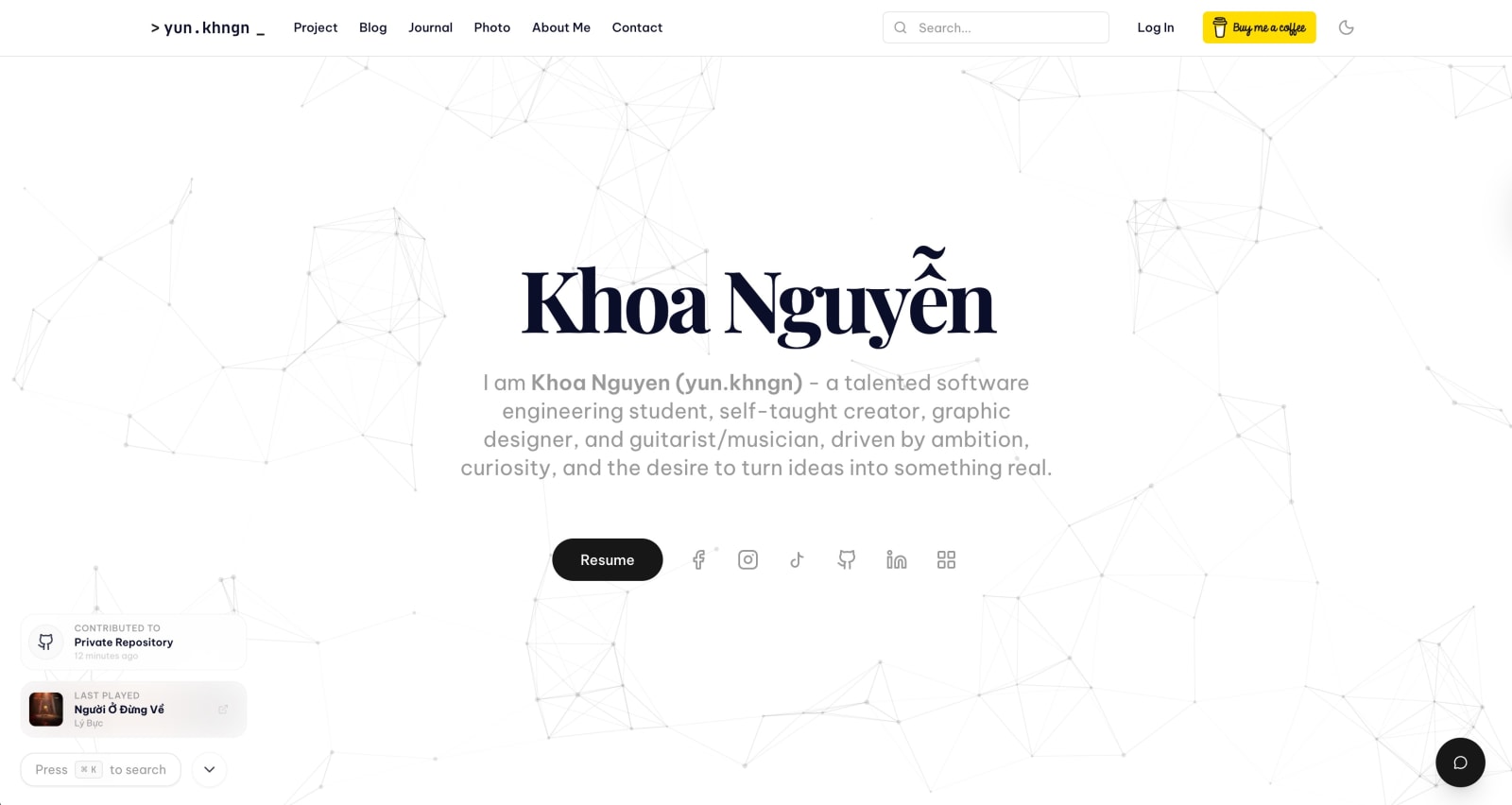
A sophisticated microservice ecosystem powering a personal portfolio and interactive digital experiences, utilizing AI-driven image processing and a robust, containerized architecture.
Case study
Context
This project represents the consolidated architecture of a personal digital platform, spanning a portfolio, blog, and an interactive handwritten letter showcase. Originally decentralized, the project was unified into a single monorepo to archive over 1,700 commits of history, capturing a complex microservice implementation designed to manage both content and high-compute media processing.
Architecture & Key Features
The system is decomposed into specialized, isolated services, all orchestrated via Docker Compose and secured behind a Caddy reverse proxy:
Frontend: Built with Next.js 15 and React 19, providing a modern, SEO-optimized interface for content consumption.
Backend API: A NestJS-based gateway implementing clean architecture with repository patterns to manage domain-specific data.
AI Vision Service: A dedicated Python/FastAPI worker utilizing OpenCV for advanced image processing.
Auth Service: A specialized microservice handling Firebase authentication and session verification.
Infrastructure: Uses Caddy for automated TLS, security headers, and rate limiting, alongside MSSQL and Redis for persistence and caching.
Technical Highlights
Computer Vision Pipeline: Implemented an automated stroke decomposition process. It uses CLAHE for contrast enhancement, adaptive thresholding, and line band detection to convert physical handwriting into digital reveal maps with timing data.
Modular Backend Design: Used NestJS to enforce strict separation of concerns, integrating diverse external services like Google Gemini for content generation, Cloudinary for asset transformation, and Resend for transactional emails.
Real-Time Integration: Leveraged Socket.IO for live visitor presence and real-time frontend updates, bridging the gap between static content and dynamic interaction.
Production-Grade DevOps: The
yunkhngn-infralayer manages the entire lifecycle, featuring automated container health monitoring, strict network security boundaries, and automated MSSQL database backups.
Outcome
The monorepo acts as a final stable archive of the platform's evolution. By consolidating independent repositories, it provides a comprehensive case study in microservice decomposition—demonstrating how specialized AI services (Python) can coexist efficiently with robust web APIs (TypeScript) within a single containerized environment.
Keep exploring
Related work

From the journal

Next project
YouTube Chord Side Panel →