Hanoi Rock City (HRC) - Event Ticketing System
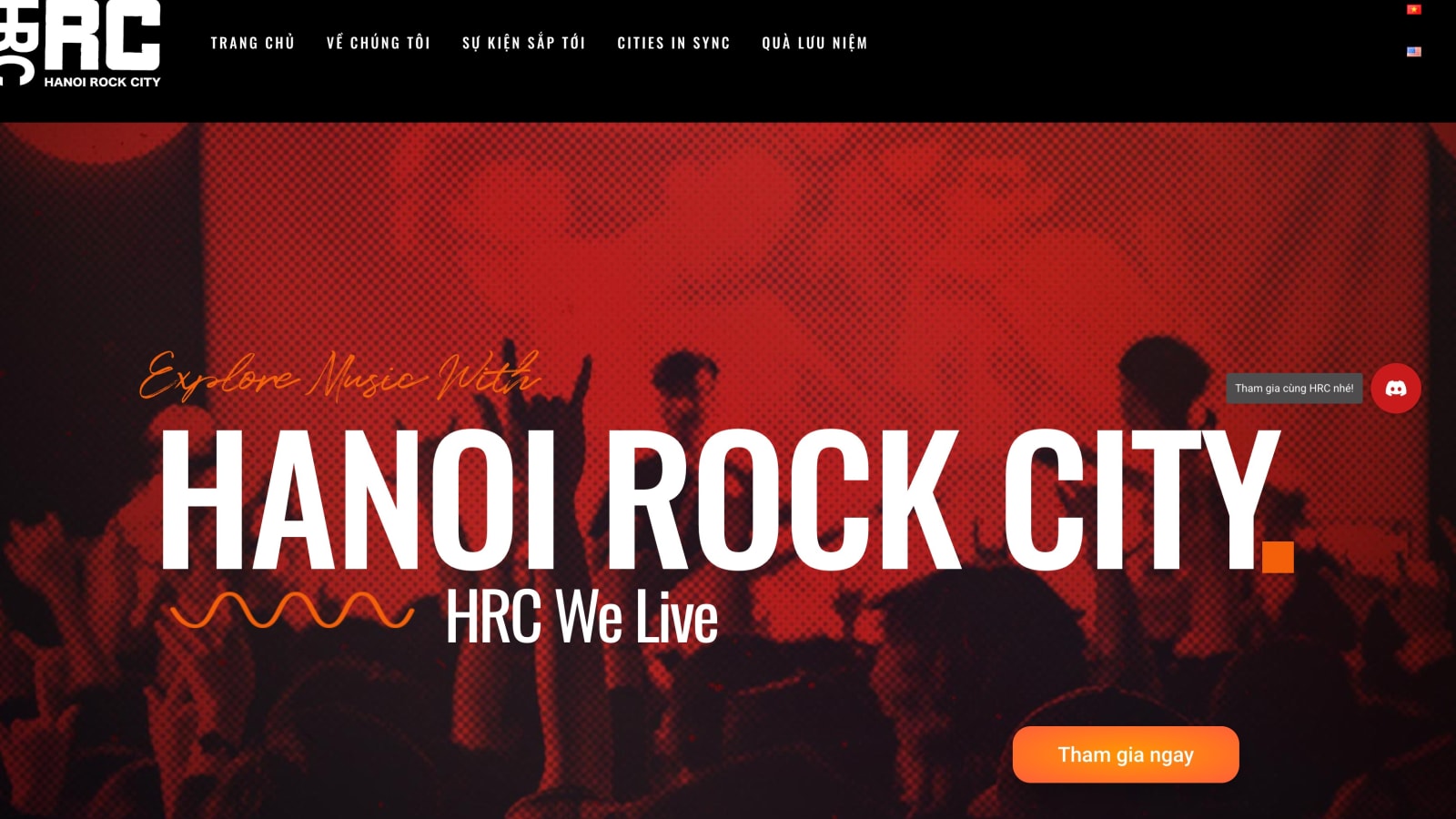
A comprehensive Java web application for managing rock concert events, ticket sales, and venue management in Hanoi, Vietnam, streamlining operations for organizers and purchases for customers.
Case study
Project Overview: Hanoi Rock City Ticketing System
The Hanoi Rock City (HRC) project is a comprehensive Java web application designed to manage rock concert events, ticket sales, and venue operations specifically for Hanoi, Vietnam. It serves as a full-featured event ticketing solution, streamlining the entire lifecycle from event creation and artist booking to ticket purchasing and order processing. The system aims to support and enhance the vibrant rock music scene in Hanoi by providing robust tools for event organizers and an intuitive platform for customers to find and purchase tickets for their favorite concerts.
Core Technologies and Architectural Choices
HRC is built upon a solid, traditional enterprise Java stack. The backend leverages Java 17 and Jakarta Servlet 5.0 for robust server-side logic and request handling. The view layer employs JSP (JavaServer Pages) and JSTL (JSP Standard Tag Library), providing server-side rendering for dynamic web content. Data persistence is managed by Microsoft SQL Server (MSSQL), a reliable relational database, ensuring data integrity and efficient querying for events, users, and orders. The application is deployed on Apache Tomcat 10, a widely used servlet container compatible with Jakarta EE specifications. The project utilizes Apache Ant as its build automation tool, managing compilation and packaging. Architecturally, the system adheres to the MVC (Model-View-Controller) Pattern, which promotes a clear separation of concerns, enhancing maintainability and scalability.
This technology choice provides a stable and proven foundation for building a transactional web application, allowing for a structured approach to development and deployment, particularly suitable for an established enterprise environment.
Key Features
For Event Organizers (Admin/Staff):
Event Management: Tools to create, edit, and manage rock concerts, including setting event details and status.
Venue Management: Capabilities to add and configure concert venues and their specific seating zones.
Artist Management: Booking and management of performing artists associated with events.
Ticket Zone Configuration: Detailed setup of pricing and capacity for different seating zones within an event.
Order Processing: Management and confirmation of ticket orders, including payment status.
Promo Code Management: Creation and administration of discount codes for events.
User Management: Viewing and managing both customer and staff accounts.
For Customers:
Event Browsing: Easy access to view upcoming rock concerts and event details.
Ticket Purchase: A streamlined process for selecting seats/zones and purchasing tickets.
Order History: Access to a personal record of past ticket purchases.
Account Management: Ability to manage personal information and preferences.
Technical Challenges and Solutions
Developing a comprehensive event ticketing system presents several inherent technical challenges:
Concurrency in Ticket Sales: Ensuring accurate real-time seat availability and preventing overselling during high-demand periods requires careful transaction management and database locking strategies.
Complex Relational Database Design: Managing relationships between numerous interconnected entities such as events, venues, zones, artists, users, orders, and promo codes necessitates a robust and normalized database schema to maintain data integrity and support complex queries.
Authentication and Authorization: Implementing secure and granular access control for different user roles (Admin, Staff, Customer) using Jakarta EE filters and session management to protect sensitive data and functionalities.
Maintaining a Traditional Stack: Working with JSP/JSTL for the view layer and Ant for builds requires a deep understanding of traditional Java EE development paradigms, which might differ from modern front-end frameworks or build tools, focusing on server-side rendering efficiency and deployment packaging.
Payment Integration (Implicit): While not explicitly detailed in the README, a ticketing system implies handling payment processes securely, which involves integrating with external payment gateways and managing transaction states reliably.
What I Learned
Through the development of the Hanoi Rock City Ticketing System, several key insights and skills were gained:
Mastery of the MVC Pattern in Java EE: Gained practical experience in designing and implementing a multi-layered application following the Model-View-Controller paradigm using Servlets, JSPs, and DAOs, emphasizing separation of concerns.
Relational Database Design & Management with MSSQL: Acquired hands-on expertise in designing complex database schemas, writing efficient SQL queries, and managing data integrity for a transactional system using Microsoft SQL Server.
Implementing Authentication and Authorization Filters: Developed a strong understanding of how to secure web applications by implementing custom Servlet Filters for user authentication, role-based authorization, and session management within a Jakarta EE environment.
Business Logic for Event Ticketing: Gained practical experience in translating complex real-world business requirements, such as event lifecycle management, ticket zone configuration, promo code application, and order fulfillment, into robust application logic.
Build Automation with Apache Ant: Became proficient in using Apache Ant for compiling, testing, and packaging Java web applications into deployable WAR files, understanding the traditional build process in enterprise Java.
Complexity Label: Intermediate
The Hanoi Rock City project is classified as Intermediate complexity. This justification stems from several factors: it is a full-stack web application that requires a comprehensive understanding of both server-side logic (Java 17, Jakarta EE) and traditional web rendering (JSP/JSTL). The project involves designing and interacting with a complex relational database (MSSQL) with numerous interconnected tables and managing multiple user roles with distinct permissions. The implementation of features such as real-time event management, ticket zone configuration, promo code application, and order processing requires robust business logic and careful consideration of data integrity and concurrency. While it doesn't delve into advanced topics like distributed systems, microservices, or reactive programming, the scope and depth of a complete, functional ticketing system make it significantly more challenging than a typical beginner-level CRUD application, demanding solid architectural understanding and problem-solving skills.
Keep exploring
Related work
From the journal

Next project
Wattpad Clone - Whatapp →