AutoParking - Smart Parking Management IoT System
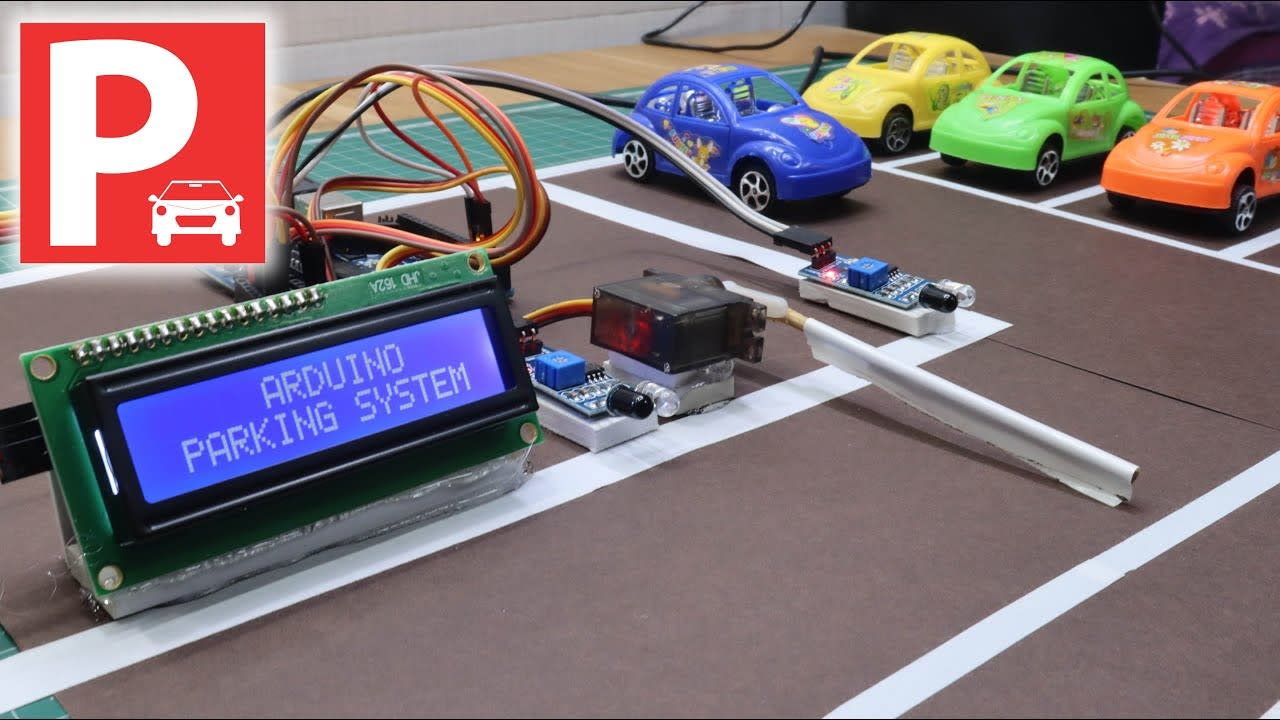
AutoParking is an IoT system leveraging ESP32, React, and Node.js for automated smart parking management. It handles slot registration, real-time monitoring, and automatic vehicle check-in/check-out with hardware integration.
Case study
Project Overview
AutoParking is a comprehensive Internet of Things (IoT) system designed for intelligent parking lot management. It aims to automate the entire parking process, from slot registration and real-time monitoring to automatic vehicle check-in and check-out, providing an efficient and streamlined experience for both users and parking operators. The system eliminates manual intervention, reduces traffic congestion within parking facilities, and provides accurate, up-to-date information on slot availability.
Core Technologies and Their Fit
This project integrates a diverse set of technologies across hardware and software components:
ESP32 Microcontroller: Chosen as the core IoT device, the ESP32 handles direct hardware interactions, including reading sensor data (for vehicle detection), controlling actuators (LEDs for status, servo for gate), and managing Wi-Fi connectivity. Its powerful dual-core processor and integrated Wi-Fi make it ideal for real-time edge processing and communication.
React (Web Client): Provides a modern, responsive user interface for online parking slot registration and management. React's component-based architecture ensures a maintainable and scalable frontend, offering a smooth user experience.
Node.js (Backend Server): Serves as the central API server, handling all business logic, data persistence, and communication between the web client and ESP32 devices. Node.js's asynchronous, event-driven nature is well-suited for building scalable network applications that can manage concurrent requests from multiple clients and IoT devices.
MySQL Database: Used for reliable data storage, including parking slot status, user registrations, and check-in/check-out logs. MySQL's robustness and widespread adoption provide a solid foundation for managing structured data.
Key Features
User-Facing Features
Online parking slot registration via a web interface.
Secure authentication through One-Time Passwords (OTPs).
Automatic vehicle check-in and check-out processes.
Real-time monitoring of parking slot statuses.
Validation of license plate formats for accuracy.
System-Level Features
Integrated Wi-Fi captive portal on the ESP32 for easy access.
LED indicators to visually display slot availability, registration, or occupation.
Automated barrier gate control using a servo motor.
Real-time communication protocols between the ESP32 and the Node.js server.
Vehicle detection using proximity sensors in each slot.
Automatic cancellation of registrations if check-in does not occur within a specified time frame (60 seconds).
Comprehensive logging of all check-in and check-out activities.
Technical Challenges
Developing AutoParking involved tackling several interesting technical challenges:
Real-time Synchronization: Maintaining consistent state between the physical parking slots (as detected by sensors), the ESP32 device, the backend server, and the database. This requires robust real-time communication and error handling.
Hardware-Software Integration: Bridging the gap between embedded systems (ESP32, sensors, actuators) and web technologies (Node.js, React) to create a cohesive, functional system.
Captive Portal Implementation: Setting up a reliable Wi-Fi captive portal on the ESP32 for initial setup and potential local access, ensuring network stability and security.
Robust State Management: Implementing complex logic for parking slot states (available, registered, occupied), including automatic timeouts for registrations and handling various check-in/check-out scenarios securely.
Reliable Sensor and Actuator Control: Ensuring accurate vehicle detection, precise gate control, and responsive LED feedback under varying conditions.
What I Learned
Developing AutoParking provided valuable insights into full-stack IoT development:
The intricacies of integrating diverse technologies, from low-level embedded programming to high-level web development, into a single, functional system.
Best practices for establishing robust, real-time communication channels between IoT devices and a centralized server, including handling intermittent connectivity.
Strategies for managing and synchronizing state across distributed components, ensuring data integrity and responsiveness in an IoT environment.
The practical application of various sensors and actuators to build an intelligent, automated physical system.
Designing a user-friendly interface that simplifies complex IoT interactions and provides clear feedback to the user.
Complexity: Intermediate to Advanced
AutoParking is classified as an Intermediate to Advanced project due to its comprehensive scope and technical demands. It involves not only a full-stack web application (React, Node.js, MySQL) but also integrates a significant hardware component (ESP32 with multiple sensors and actuators) that requires real-time interaction and state synchronization. The project demonstrates a deep understanding of embedded systems, network communication, database management, and user interface design, making it a robust and challenging undertaking that combines several distinct engineering disciplines.
Keep exploring
Related work

From the journal

Next project
Tarot Reader →